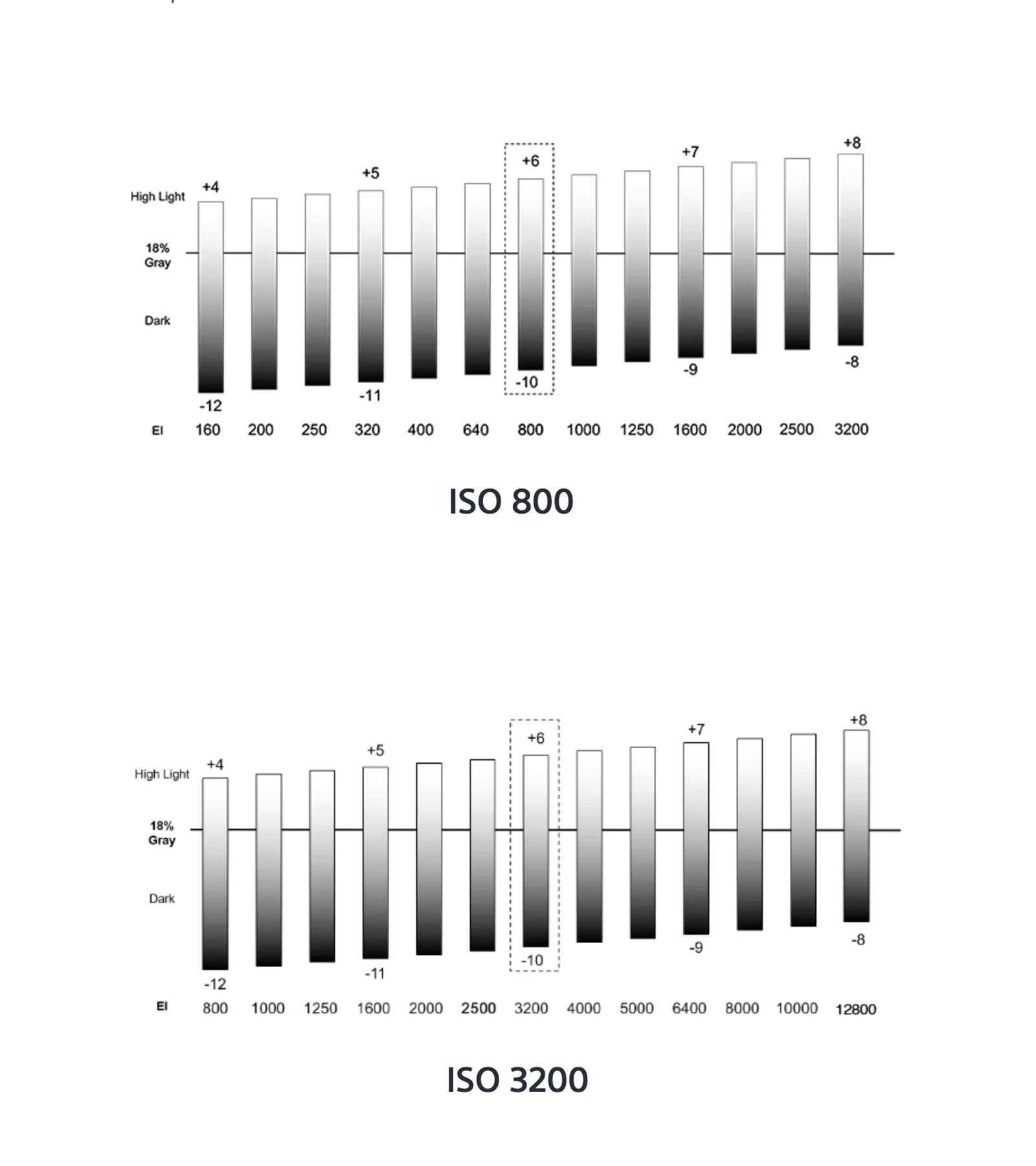
Heard from folks that have been at NAB that the DUAL ISO is gone on Spark and has been replaced by optimized ISOs ranging from 400,640, 800, 1280 and 1600. Can the Pixboom team confirm this? There is obviously a big benefit to the dual ISO sensor - namely, shifting the gamma lower at higher sensitivities (like Venice).
Curious to hear more and hear how the high ISO performs compared to the pre-production models.
Also slightly concerned about the lack of a OLPF. How is that affecting fine detail and possible moiree concerns?
Yes, I’ve been making a case for OLFP since last year (see below forum topic I made about OLPF) but they said it should be okay for most shooting conditions. Interesting about the dual iso.
That will make it unusable on LED volumes, but that’s probably a rare situation for high speed like this, plus if you can afford an LED volume you can afford a Phantom.
Plus, this is Pixboom’s first camera. It probably won’t be long before R&D begins on Spark 2 or whatever it will be called.
Yeah maybe not the LED thing. It would probably costs too much to implement! But at least maybe a physical removable OLPF that can be implemented either with this model down the line or a Spark 2 like you said.
Actually, the 5 ISO of the Spark are native ISOs. So instead of 2 (dual), you get 5. Each EI value (400, 640, 800, 1250 and 1600) are sensor-native analog switches, which carry the same dynamic range and over/under stops.
I mean… I much rather have a dual ISO sensor. More is not more, as 2x native ISOs allow me to shift my dynamic range much more precisely. Go with 1,250 to protect highlights in bright environments or go a step up to 1,600 to get more range in shadows in low light.
Having 5 native ISOs isn’t per se bad but certainly limits how you can extract the most out of a sensor!
I’m not sure I understand… A dual native ISO sensor is a sensor with 2 native ISOs. This sensor has 5 native ISOs, which is 3 more than 2. I don’t have the exact spread of stops below/above each ISOs, but the dynamic range is consistent throughout. You can do what you described above, selecting between the various value to prioritize protecting highlights over shadows.
Dual ISO sensor will often have the native values spread much farther apart (like 800 and 12800), which is obviously a great advantage - but this specific global shutter offers 400 through 1600.
The “dual ISO” early claim was chosen to avoid confusion, since people aren’t used to multiple native ISOs. We were looking at 400 and 1600, but saw no point in excluding the intermediate available native values. It’s not a feature that was removed or changed (still the same great sensor), just a clarification.
Interesting - are you saying there were no in-between ISO stops before? Only either 400 or 1,600?
Venice 2 is 800 and 3,200 (only prosumer cameras are typically in the higher 800/12,800 range) - so the same 2 stops difference as SPARK.
The benefits of moving within the different ISOs in each base are pretty crucial to get the most out of the sensor. Does not matter if it’s a commercial or movie - I will jump around a lot between ISOs and won’t shy away from using the 3,200 base even in daylight sometimes (e.g. I don’t have any harsh highlights and ISO 320 @ 800 is not enough light, I will shoot it at 1,600 @ 3,200).
It’s what makes a dual-base sensor special and helps offset the lack of a crazy-high DR like A35.
So with all due respect, having more ‘native’ ISOs is great but does not replace the benefits of a classic dual ISO sensor.
The Spark always had 5 native ISOs. All ISO values (400, 640, 800, 1250 and 1600) are equally native, meaning they are all derived from distinct analog gain paths at the sensor level. The global shutter sensor developed for the Spark has scientific/industrial DNA in its roots - multiple independent ADC signal amplifiers are not uncommon for such specialized sensors. We chose to initially feature the “dual-ISO” as this is something people are familiar with, and it’s not technically incorrect - if you limit yourself to using only 400/1600 you will get the expected dual-ISO behavior.
What I am trying to convey is that the benefits, or as you put it “what makes a dual-base sensor special” are the same here. You can treat the 400 and 1600 ISOs the same way you would with the Venice 800 and 3200 bases (only lower), except in this case you have access to additional in-between values. Each of those native ISO values allow you to get the most out of the sensor in finer-grained steps - there are no digital gain applied at any point.
We have yet to run strict analysis & tests to determine the exact distribution of above/below stops for each ISO setting, and I’m looking forward to get those going so we can share the results.
TL/DR: You do have dual-ISO with the Spark, and then some. “Quintuple-ISO” sounds a bit off, but that is what the sensor affords you. Each ISO value roughly retains the full dynamic range, and just like any dual-ISO base as signal is amplified the noise floor gets amplified too.
Very interesting. I think some of us were worried that the five “native ISOs” was just marketing speak for remapping/redistributing the dynamic range of a single analog gain into multiple ISOs (much like any camera does when you “change” ISO on a traditional sensor).
Good to hear it actually has five distinct analog gain paths.
The camera won’t prevent you from exposing this way for your chosen ISO, but you’d need to under- or over-expose your shot in camera and reverse the exposure shift in post. Ideally this exposure shift could be controlled in camera (so monitoring shows intended exposure) and baked into the recorded files (so no need to adjust exposure in post). I haven’t used the camera yet so it’s possible that such an option already exists - if not, it would be a handy feature to add in a firmware update.
We already know about the future 12-bit update, but the sensor (if it’s the model I think it is) also supports dual gain output (like the Alexa or Canon C70) for roughly 2 additional stops of DR over the normal 12-bit mode at the cost of significantly reduced frame-rates (limited to 80fps at full resolution). Whilst this would be nice to have (and I would definitely use it) I also wouldn’t mind if they chose not to implement this as 80fps is not the primary purpose of the camera.
Even adding 12-bit support drags down the maximum frame rate quite a bit, and the camera has the data rate to handle dual gain, so I wouldn’t rule it out.
It would make the Spark even more enticing for smaller production companies that are based on a single camera, rather than a cinema camera + a specialty camera.