We want better results than the freefly ember in weight wise and cost wise also in the dynamic range and raw files also please let us know when it will be released so we can use it on FPV drone to make really crazy stuff
3 Likes
Yeah, I’m really hoping the dyanmic range can be in the 13 to 14 stop range. Right now the Chronos I have is barely 10 stops I think. I think the Ember is 11-12 stops.
I’ve seen the Spark in NAB, and its weight won’t be lighter than the Ember. This is because Spark includes many professional interfaces, a built-in screen, and other components, which are determined by the design philosophy of the two cameras. I believe its weight will be closer to that of the Komodo-X, which seems more reasonable.
1 Like
Completely agree, I won’t be getting the unit if it is just an ember competitor, we need cine raw output, proress 422 is not good enogh for professional work, if you need a list of the outputs provided buy phantom series let me know, I have the PhantomGold2k so can easily send a screen shot, i dont use most outputs as the cine raw is clearly the best.
It would be pretty cool if you could pull media during operation vie ethernet, and adjustable triggering (end trigger, mid trigger) and make CRS (black callabration super clear) i think freefly completely missed the point of CRS in the first place, this made it an expensive hobby cam rather then a usable tool. Also a personally preferred tool would be to take stills like the blackmagic 6k pro it saves alot of time if i want to do a creative stopmotion to highspeed shot.
Additional, it would be great if you can shoot down to 24fps too but only if the raw features are there, this isnt a deal-breaker, it would just be useful.
1 Like
Thank you for your suggestions! There are a couple of questions I’d like to discuss further:
- I remember that Freefly doesn’t support black calibration. Have you encountered any noticeable image issues when using Freefly?
- Could you let me know what specific scenarios you mainly use still image capture for?
Thank you so much!
-
It’s fundamental to highspeed camera to have black callabration, on the PhantomGold2k i do it approximately every 20 minutes in studio setting, I haven’t seen it on the ember, but getting a clean image on the wave was a horror show.
-
Yes so if you where to se my work at heisenbacon.com you’ll see some examples of this, basically I would be utilizing the locked of camera to build a scene, as an example let’s say we have 1 strawberry and I want to have 15 strawberries appear peice by peice and then switch to video mode and blast these strawberries towards the camera, the way I would prefere to do it is in camera rather than masking elements out in post.
1 Like
One thing that was impressive with the Spark was the higher frame rates it would have over the Ember. Well, it looks like Freefly took notice and is updating the Ember with a new firmware that unlocks higher speeds, with the posted ones now almost identical to what we’re getting with Spark. So there goes that advantage. At least we still have higher (dual) ISO and RAW support (among other things). I’m guessing Freefly saw what Pixboom is bringing to the table and decided they needed to up their game to compete.
Here’s what the Ember is going to get with FW v3.0:
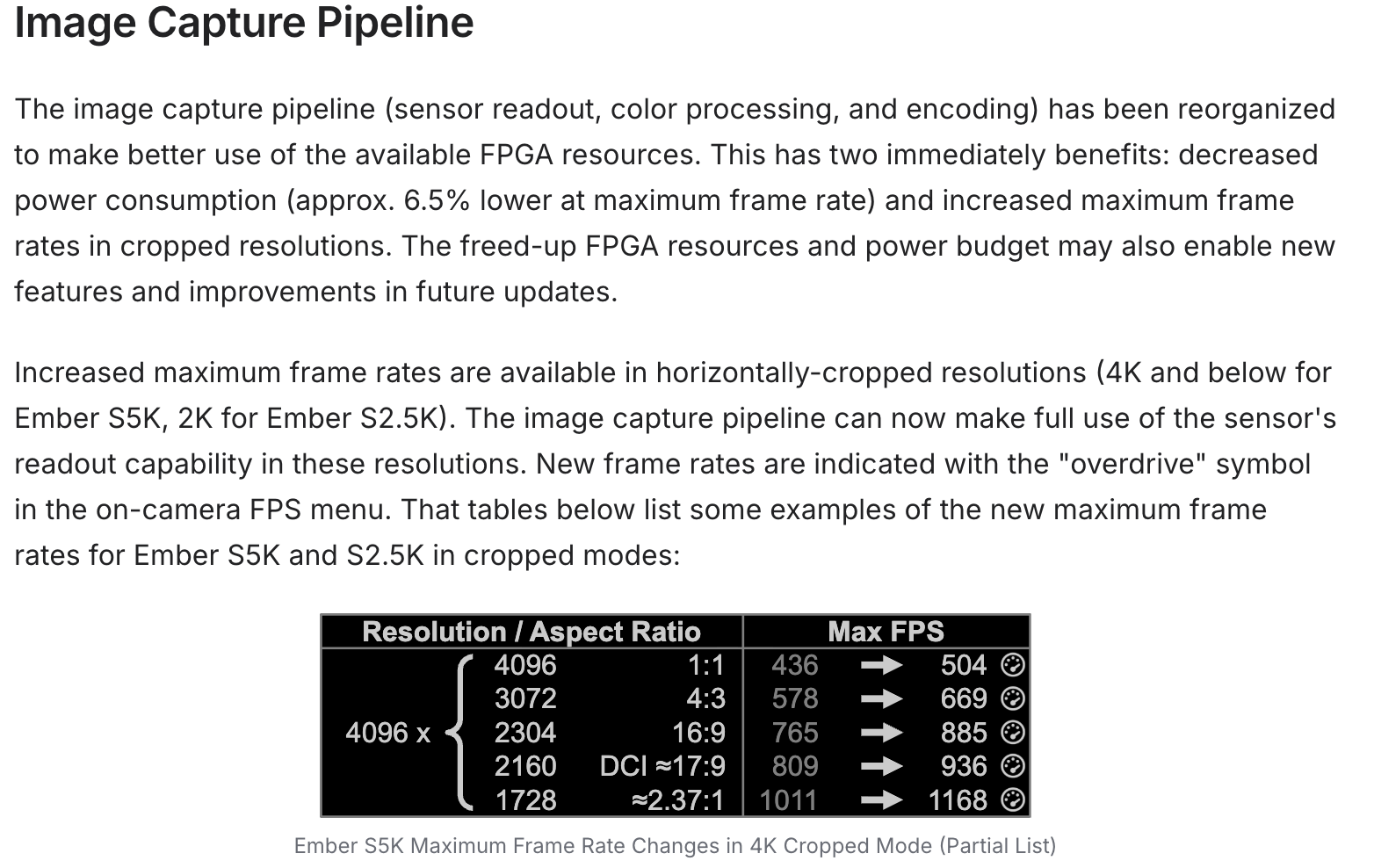
Here are some frame rates at the same resolution:
(Spark) (Ember Old) (Ember FW v3.0)
4K 16:9 4096x2304
887fps 765fps 885fps (old difference: +122 fps, new difference: +2 fps)
4K 2.37:1 4096x1728
1171fps 1011fps 1168fps (old difference: +160 fps, new difference: +3 fps)
2K 16:9 2048x1152
1724fps 1487fps 1718fps (old difference: +237 fps, new difference: +6 fps)
2K 2.37:1 2048x864
2182fps 1946fps 2246fps (old difference: +236 fps, new difference: -64 fps)
2 Likes
Thanks for sharing this! I wonder if Ember will try to implement dual iso via firmware later on if possible or better low light at least.
It won’t do that because the sensor used in this camera doesn’t support that capability. It’s also interesting that Freefly is only now introducing the maximum possible fps. According to the sensor specifications, the maximum fps at readout are:
250 fps - 12-bit
500 fps - 10-bit
1000 fps - 8-bit
The Pixboom offers far more benefits than just dual native ISO and RAW file support.
The BSI sensor is the biggest breakthrough for me; the fact that they’re introducing a 12-bit mode is brilliant. There are plenty of pros, but there are also some cons, such as the lack of an Ethernet port.
3 Likes
Agreed. I suspect that there will be a lot of Spark users for whom the Spark is their only cinema camera, once it gets its 12-bit mode. The fact that it’s less expensive than its competitors does not imply that it’s cheap by any means.
I very much hope for native Resolve support soon though.
2 Likes
I’ve been using Ember from the pre-production models on and even had access to an unpublished FW that enabled LOG.
The biggest issues with Ember are
a) the color profiles - HLG just does not cut it.
b) A lot of FPN and even banding when shooting LOG. At ISO 400 the camera is already maxed out.
Having proper LOG profiles that can be integrated into a color pipeline with other cameras is crucial. The fact that Freefly never took that extra step and pushed further is likely the biggest downfall of EMBER a reason why the Spark will hopefully excel!
Apparently dual ISO is gone - as per a friend that saw the camera at NAB.
1 Like
Did they claim in the past it would be dual iso?
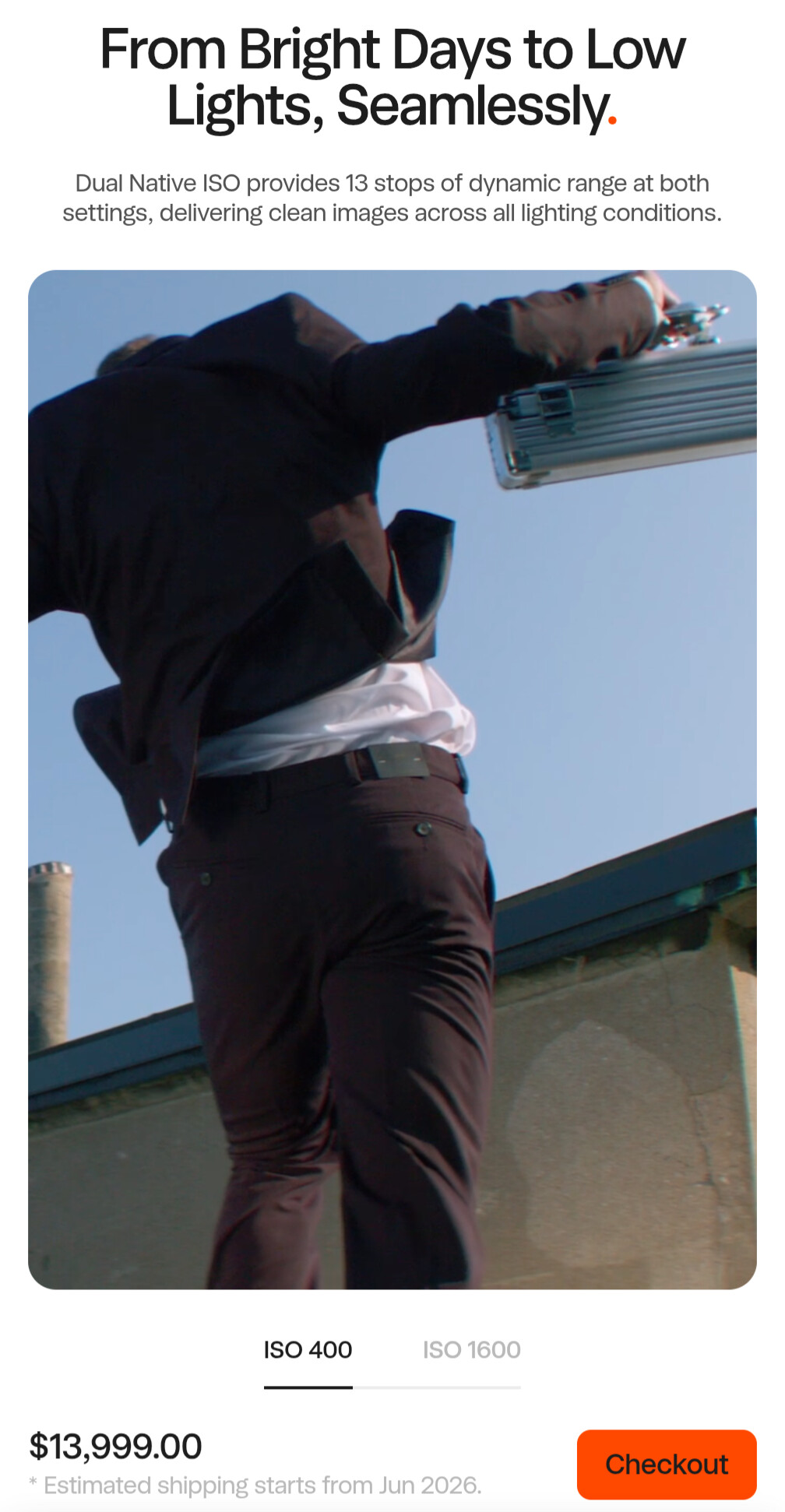
Yes. One of the biggest selling points was the 1600 iso option. Here’s the dual ISO marketing on the website.
1 Like
Interesting. Hope @admin can confirm.
Did they actually get rid of it or are they just changing how the end user interfaces with it? It apparently still has settings for 400 and 1600 (and some in-between). The user doesn’t manually set the base ISO, but it’s possible the camera auto switches between bases depending on which flexible ISO is selected.
Until we get word one way or the other, I think it’s premature to assume the dual ISO has been abandoned.
2 Likes

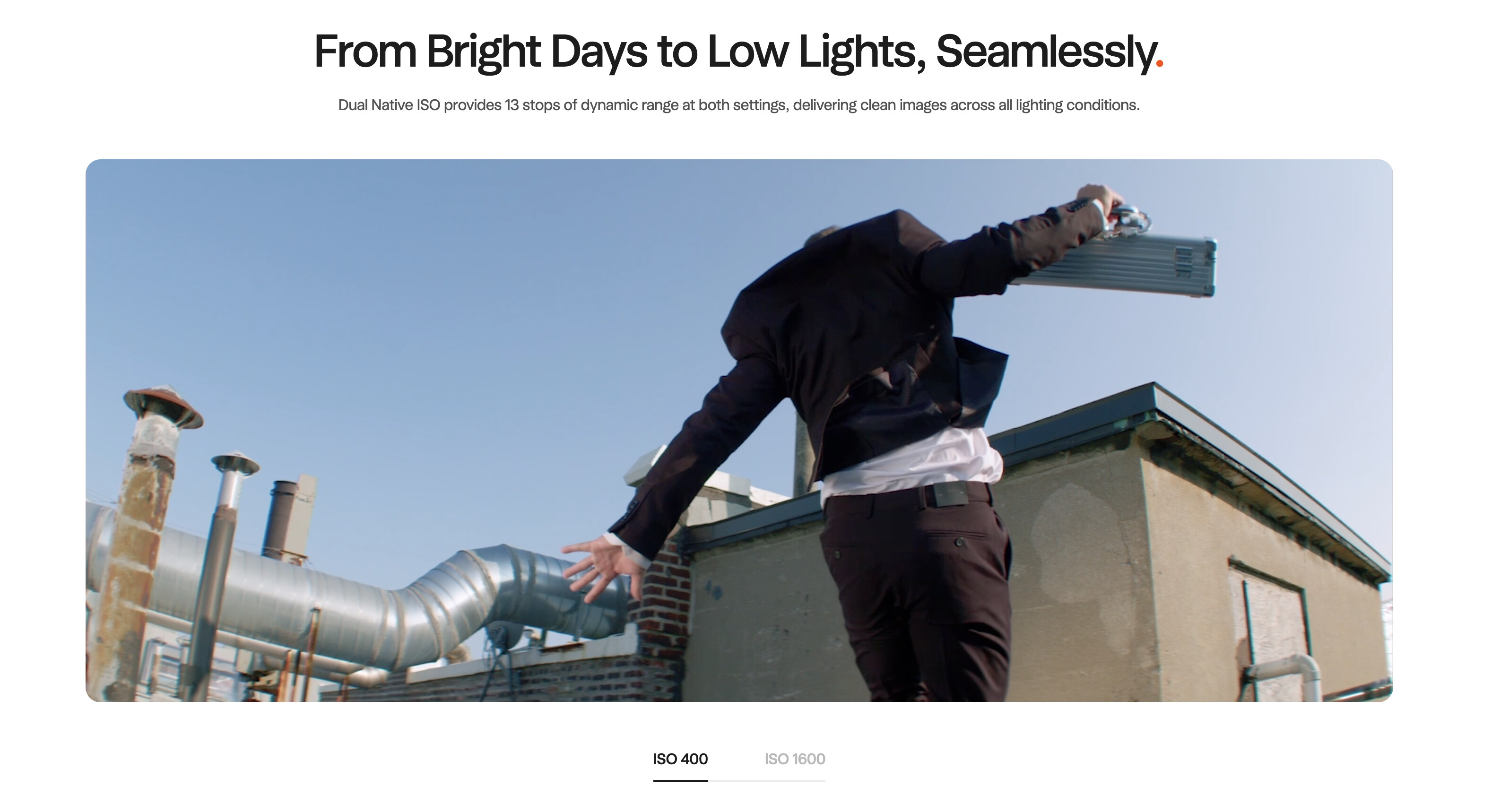
Yes - it was literally one of the main selling points and ways they were standing out compared to other slowmotion sensors on the market.
What I am hearing from NAB is that its not dual ISO and they just opmitized the ISO performances - so 1,600 is still very clean but its not trye dual-ISO.
I think we need @young to chime in here to actually confirm.
1 Like
Hey! I can actually clear this up firsthand — I’m here at NAB at our booth! 
Dual ISO is absolutely still there — it has not been removed or changed. What we’ve done is further optimize the overall ISO performance, so the image quality across the range is even cleaner than before. Your friend may have misunderstood what was shared at the show, which is totally understandable given how busy it gets!
Rest assured, Dual ISO remains a core feature of the camera.
3 Likes
Dual ISO is and has always been a core feature of our camera. It’s not going anywhere! 
1 Like